The Human Stories of Advanced Legal Research, Part 2
October 7, 2026
Welcome to the latest installment of our series exploring the fascinating people and stories behind legal research. In Part 1, we covered George Boole, the man behind the name “Boolean search”; Simon Greenleaf, the man first credited with creating a citator; and John B. West, the founder of the influential West Publishing Company.
Today, we’re going to continue our dive into the history of citators and case reporters, two of the fundamental building blocks for legal research.
1. Frank Shepard
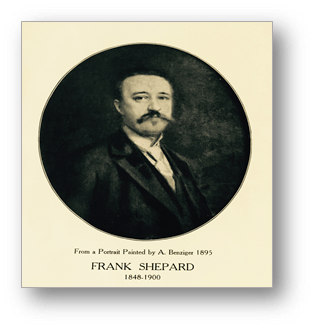
While Simon Greenleaf is the first person credited with creating a citator system for tracking case law treatment, Frank Shepard was the one who best commercialized the concept.
Frank Shepard was a salesman for a Chicago Legal Publisher in the late nineteenth century. By this time, a flood of case citation indexes had begun to saturate the legal publishing market. His first crack at it, Illinois Citations, was by many accounts not even particularly good. But Patti Ogden said it best in her wonderful article on the subject: Frank was a businessman, not a lawyer.
Most other case citators at the time were one-off passion projects by practicing lawyers and scholars. Frank, instead, focused on turning the concept into a viable business, committing to a broader coverage of different jurisdictions and frequent supplemental updates. These updates were critical in convincing lawyers to rely on Shepard’s citations over its many competitors.
This makes him an interesting mirror to John B. West, who was best able to commercialize the traditional case reporter. It seems fitting that the two men’s name are so prominent in two of the most popular competing legal databases: Lexis+ (which still carries and heavily advertises Shepard’s Citations) and Westlaw.
Frank Shepard’s story is an excellent reminder of the massive influence profit-seeking companies have had on our legal research landscape, and that profit motive ultimately inspires many of the choices made by legal publishers and databases vendors.
2. Sir Edward Coke

While Frank Shepard builds on our previous discussion of citators, Sir Edward Coke is (among other things) an important figure in the history of case reporters, just like John B. West.
Unlike West, Coke is not best known for his contributions to the case reporter format. He was a massively influential English judge and politician who had a major hand in the development of the common law. But he also wrote a massively influential series of case reports, Law Reports (or Coke’s Reports) which were first published in 1616. His reports were far from a neutral summary of case holdings: they were full of commentary and personal analysis of legal thory, and have been criticized for their varying historical accuracy. The original volumes were seized by the Crown at his death because of the ideas they contained. These reports, along with his other writings and Blackstone’s Commentaries, were heavily relied on by colonial and early American lawyers. Often they may have been some of the only legal texts available for legal research at the time.
Coke’s life and work provides many lessons for legal research students. First, its a reminder that the open publication of legal holdings and new ideas is an essential ingredient in a free and democratic society. Second, a reminder that even “neutral” resources like case reporters are assembled by human beings with their own biases and goals. Finally, his influence on early American lawyers provides a great reminder of the critical link between English and American law and a reminder that our law doesn’t begin and end with the American Constitution and Supreme Court cases as we often assume.
Thanks for taking another trip down the fascinating lives of historical figures in Advanced Legal Research! Below are some articles and resources for further reading
- Patti J. Ogden, “Mastering the Lawless Science of Our Law”: A Story of Legal Citation Indexes, 85 Law Libr. J. 1 (1993).
- LexisNexis, Shepard’s Citation Guide Part 1: The History
- UMKC School of Law – Sir Edward Coke Collection
- George Garnett, The Ould Fields: Law and History in the Prefaces to Sir Edward Coke’s Reports, 34 J. Legal Hist. 245 (2013).